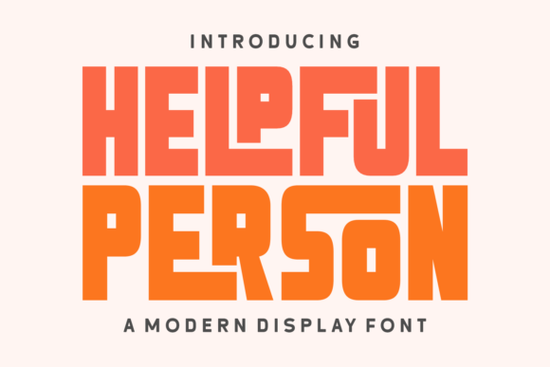
If you're hunting for a typeface that brings instant nostalgia with a bold, friendly punch, the Helpful Person font might be exactly what you need. This retro display font blends chunky block shapes with soft curves and playful ligatures, making it stand out for holiday branding, vintage labels, posters, and anything that wants a 70s-inspired look. It's one of those display fonts that works best when you need a statement without leaning too far into novelty.
What kind of projects suit the Helpful Person font?
Because of its thick, confident letterforms and warm personality, this font works well for:
- Christmas and Thanksgiving designs – cards, banners, social media graphics, and packaging that need a festive, retro feel.
- Vintage clothing labels and tags – the chunky shape mimics old-school typography found on denim jackets or record sleeves.
- Event posters and flyers – especially for fairs, markets, or community events where you want a friendly, approachable look.
- Logotypes and branding – small businesses, cafes, or artisan brands can use it for a memorable wordmark.
- Packaging and product labels – think craft beer, handmade soap, or homemade jam where a retro vibe adds character.
While it's designed as a display font (best for headlines and short text), its curves and ligatures add a touch of whimsy that keeps it from feeling too rigid.
How does it compare to other retro display fonts?
There are plenty of retro display fonts out there, but Helpful Person strikes a nice balance between boldness and readability. Fonts like Dusty lean more into a rough, worn look, while Lemon offers a sharper, cleaner retro style. Helpful Person sits somewhere in between – it's sturdy but not harsh, and the gentle curves make it feel friendlier than a straight slab serif. If you've used Waves Beach or Moment Request for summer or formal projects, this font fills the gap for cold-weather, nostalgic designs. It also pairs nicely with simpler sans-serif fonts for contrast.
Is it easy to use the special characters and ligatures?
Yes, the font includes PUA (Private Use Area) encoding, which means you can access extra glyphs and ligatures directly from software like Adobe Illustrator, Photoshop, or even Canva (if it supports PUA). You don't need special software – just open the character map or use the glyph panel. This is a huge help when you want to add flourishes or connect letters naturally without manually editing curves. For crafters and print-on-demand sellers, this saves time and gives your designs a polished look.
Who is this font actually for?
Honestly, it's for anyone who creates physical or digital products with a retro heart. That includes:
- Graphic designers working on holiday campaigns or vintage-themed branding.
- Crafters making printable cards, stickers, or scrapbook elements.
- Print-on-demand sellers designing t-shirts, mugs, or tote bags with nostalgic slogans.
- Small business owners who want a unique look without hiring a custom type designer.
- Hobbyists exploring creative projects and building a style that feels personal and warm.
If you're used to fonts like Juicy Lemon, you'll appreciate how Helpful Person brings a similar playful energy but with more weight and structure – great for designs that need to pop from a distance.
Practical tips before you use Helpful Person in your next project
Before you download and start designing, here's a quick checklist to make sure this font works for you:
- Check your software supports OpenType features – PUA encoding works best in programs that offer a glyph panel. If you're using basic web tools, you might not see all the fancy ligatures.
- Use it for headlines, not body text – the thick strokes make long paragraphs hard to read. Keep it for titles, product names, or short callouts.
- Pair it with a simple clean font – a neutral sans serif like Montserrat or Lato balances the chunky retro style without clashing.
- Test it on different backgrounds – because the letterforms are solid, it works well on both light and dark backgrounds. Try a slightly textured paper or soft color to enhance the vintage feel.
- Combine with retro-themed textures or illustrations – think halftones, grain overlays, or simple line art to complete the look.
If you're still exploring options, take a look at similar retro display styles from the same collection. Each has its own personality, but Helpful Person is a solid choice if you want warmth, clarity, and a touch of nostalgia in one package.
Explore Design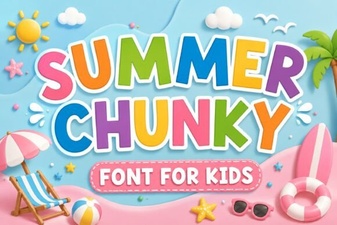 Creative Chunky Fonts for Your Summer Designs
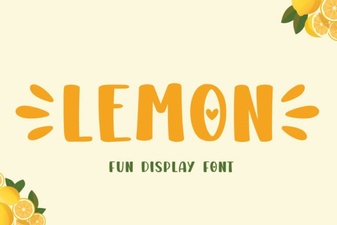 Lemon Font: Fresh Typography for Your Designs
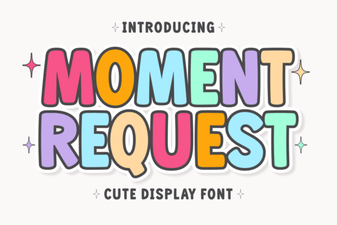 Introducing Moment Request: Your Creative Design Font
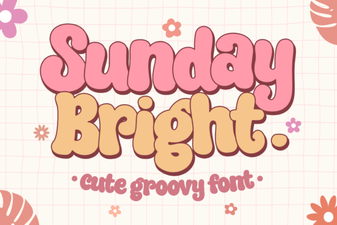 Sunday Bright Font: Design Ideas & Free Download
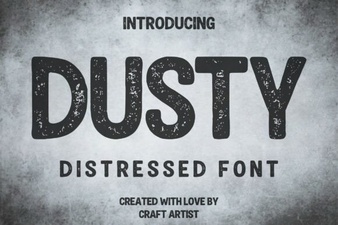 Dusty Font Designs for Vintage-Inspired Projects
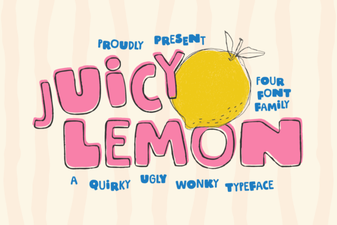 Juicy Lemon Font: Citrus-Inspired Design Projects